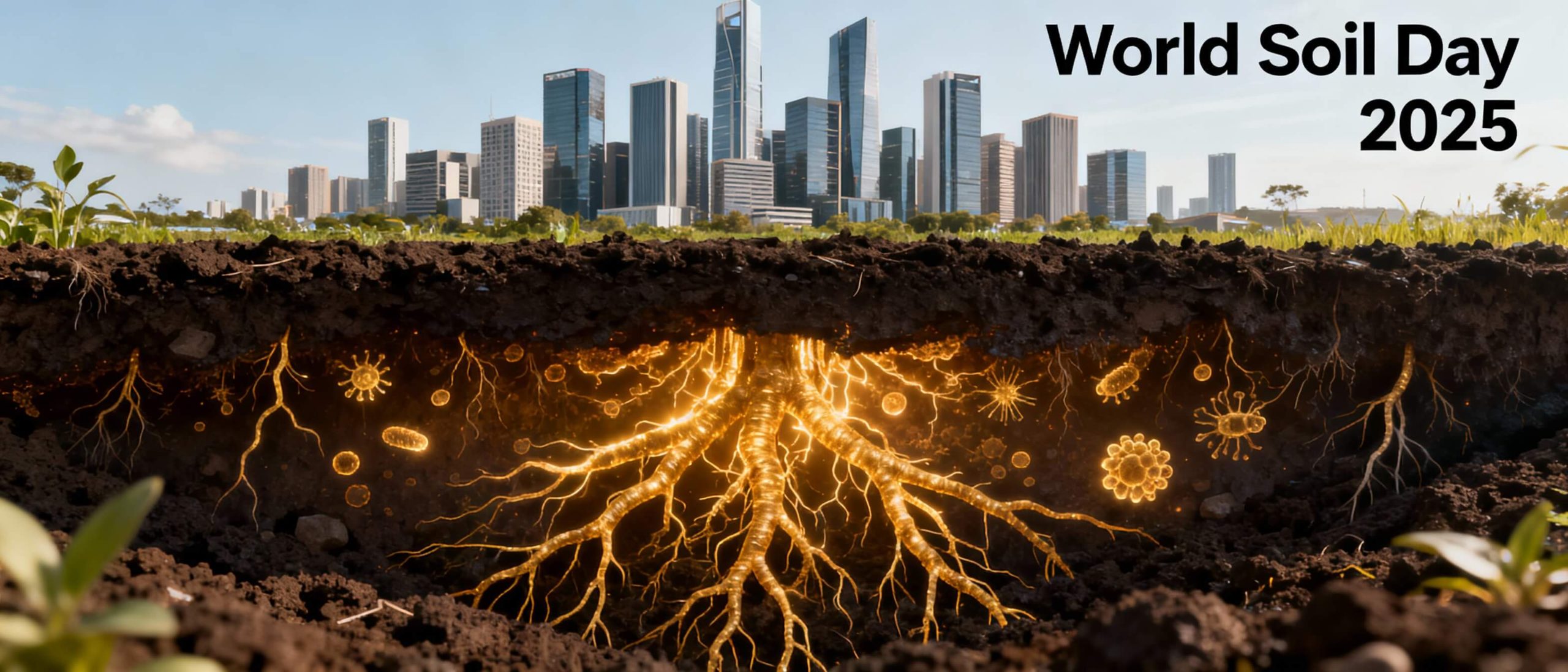
As we mark World Soil Day 2025 under the banner of “Healthy Soils for Healthy Cities,” the irony is stark. We are celebrating the vital link between urban resilience and soil health while staring down a barrel of data that suggests we are failing on both fronts. I see this year not just as a celebration, but as a critical juncture. The 2025 FAO data is unequivocal: the metabolic rift between our nutrient-hungry cities and our nutrient-depleted rural hinterlands is widening.
While policymakers discuss “soil sealing” in urban centers today, we must simultaneously confront the silent crisis unfolding in the farmlands that feed these cities. The latest reports confirm that we are stripping away 30 billion tonnes of topsoil annually. We are losing the biological foundation of our civilization faster than nature can replenish it.
1. The Global Diagnosis: A Planet Losing Its Skin (2025 Data)
The “2025 State of the World’s Soil” reports paint a picture of a resource pushed to its limit. Globally, we have now degraded approximately 33% of our soils, with projections showing this could reach 90% by 2050 if current trends persist.
- India & Asia: The situation in our own backyard is critical. Nearly 30% of Indian soils now have organic carbon levels below 0.5%, a threshold that effectively renders them “living dead” soils unable to support robust microbial life. Across the Indo-Gangetic Plain, soil carbon has dropped by as much as 25% in just two decades due to intensive tillage and monocropping. In broader Asia, 40% of cropland suffers from severe nutrient imbalances.
- Africa: The continent faces a “carbon crisis” of a different kind. Soil Organic Carbon (SOC) levels in cultivated lands across Africa often remain below 1%, leaving farmers exceptionally vulnerable to the droughts exacerbated by climate change.
- Europe: Despite its green rhetoric, Europe is bleeding soil. Erosion rates in Southern Europe now frequently exceed 10 tonnes per hectare per year. However, a major policy shift occurred this year: the EU Soil Monitoring Law was officially adopted in June 2025, mandating member states to establish rigorous biological and chemical monitoring systems, a legislative model the rest of the world must watch closely.
- The Americas: Latin America is losing carbon at an alarming rate, with newly converted lands in Brazil and Argentina losing 20-50% of their original carbon stocks shortly after deforestation.
2. The Hidden Crisis: The Soil-Human Gut Axis
For years, we treated soil health and human health as separate silos. That ends now. Emerging research in 2025 is solidifying the link between the soil microbiome and the human gut microbiome.
We are realizing that the “extinction” of soil microbes due to chemical overkill is leading to a parallel loss of diversity in our own guts. The same molecules that signal health in a plant root system are often analogous to those regulating our own immune systems. When we eat food from “dead” soil, we are starving our own internal ecosystem. The 2025 focus on “Healthy Cities” must therefore include “Healthy Guts”, which is impossible without living soil.
3. The Economic Reality: A $10 Trillion Hemorrhage
Let’s talk money, because that’s what moves policy. Land degradation is not just an environmental issue; it is an economic hemorrhage costing the global economy between $6.3 and $10.6 trillion annually in lost ecosystem services.
Conversely, the cost of inaction is far higher than the cost of repair. Rehabilitating degraded land costs an average of just €200 per hectare, while the return on investment can be as high as 12:1. The emerging regenerative agriculture market, projected to hit nearly $50 billion, offers a mechanism to capture this value, but only if we ensure fair transmission of value to the grower.
4. The Way Forward: Closing the Loop
We cannot solve 2025’s problems with 1960s Green Revolution thinking. The “Way Forward” requires a paradigm shift from extraction to regeneration.
- Urban-Rural Circularity (The Bioeconomy): With two-thirds of humanity expected to live in cities by 2050, our urban centers have become massive nutrient sinks. We must stop viewing urban organic waste as garbage and start viewing it as “soil gold.” We need aggressive municipal composting and bio-conversion infrastructure to return Nitrogen, Phosphorus, and Potassium (NPK) from city waste back to rural farms. This closes the nutrient loop.
- Democratized Data: We need to break the monopoly of expensive labs. The future is in handheld, spectral soil analysis tools that put the power of testing into a farmer’s pocket. The 2025 EU Soil Monitoring Law sets a precedent here, but we need open-source equivalents for the Global South.
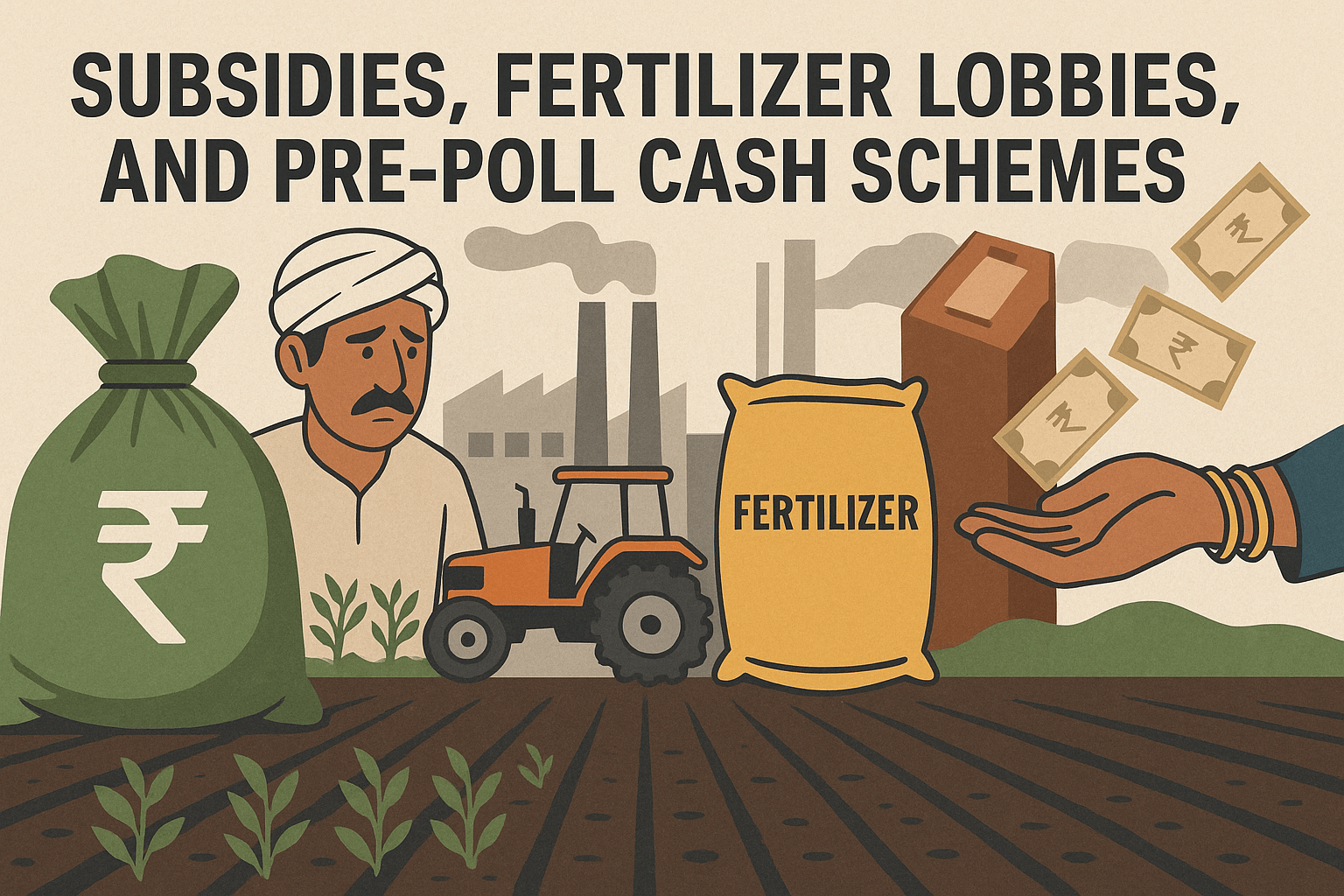
- Policy: Payment for Ecosystem Services (PES): Farmers who build soil health by sequestering carbon and improving water retention, are providing a service to society. They should be paid for it, just as a utility company is paid to provide water. Subsidies must shift from chemical inputs (Urea/DAP) to soil performance outcomes.
5. A Call to Collaboration
Whether you are a policymaker, a corporate leader, or a citizen, passivity is no longer an option.
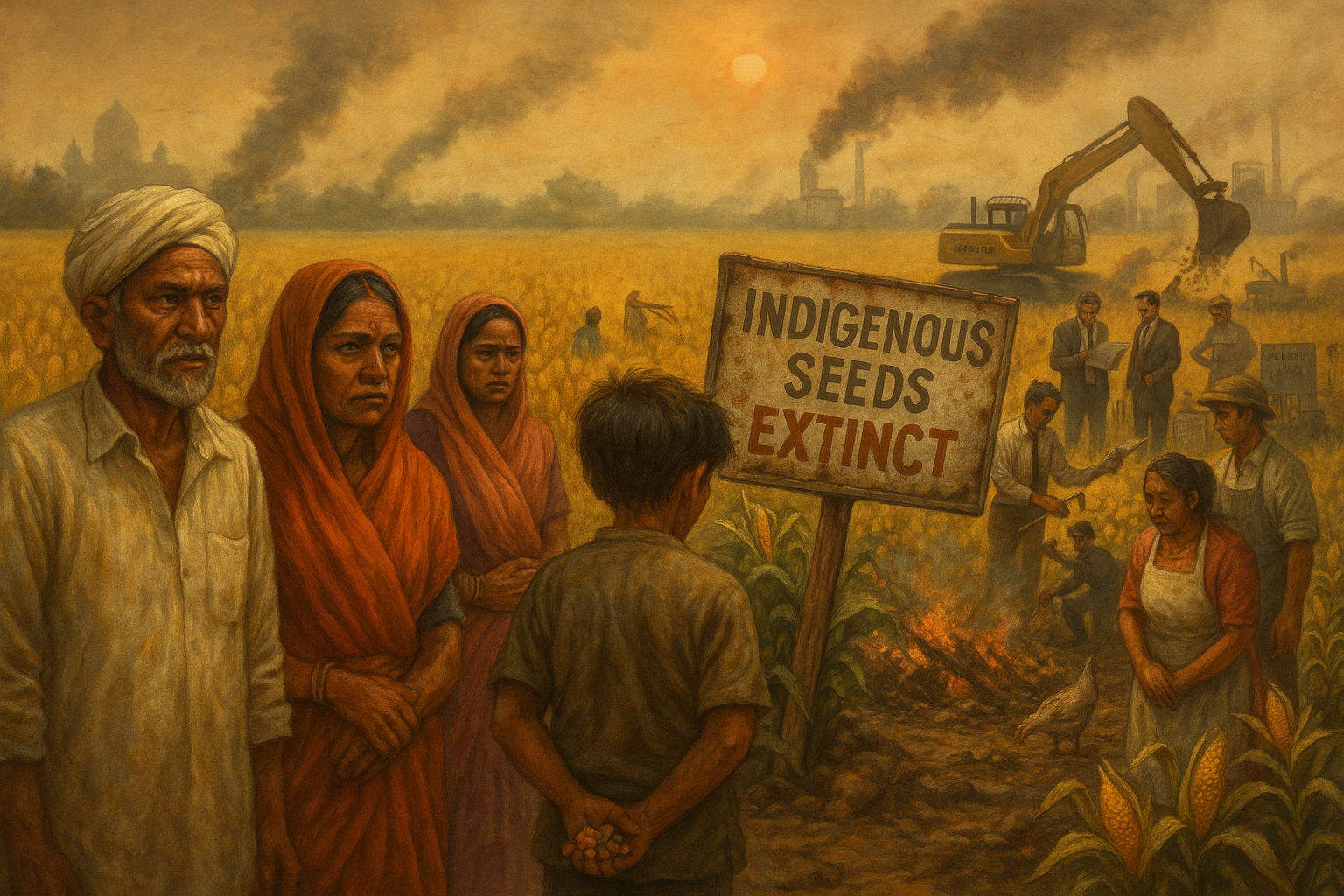
- Researchers: Stop working in silos. We need to integrate Traditional Ecological Knowledge (TEK) with modern metrics. Indigenous practices are not “folklore”; they are time-tested risk management strategies that we are only now learning to validate with data.
- Consumers: Demand transparency. If a food brand cannot tell you about the soil health of its supply chain, it does not deserve your money.
- Governments: Follow the EU’s lead. Legislate soil health. Make “soil destruction” a liability and “soil regeneration” an asset class.
Conclusion:
Soil is the skin of the earth a living, breathing membrane that mediates between the geology below and the biology above. Saving it requires us to be humble students of nature and bold innovators of technology.
Let us use World Soil Day 2025 not just to post hashtags, but to commit to the “Brown Revolution.” Let’s collaborate to put carbon back where it belongs in the ground.
Author’s Note: This article draws on the latest 2025 data from the FAO, Global Soil Partnership, and the newly adopted EU Soil Monitoring Law.