
Food systems are routinely framed in terms of productivity, efficiency, technology, and markets. Policy debates focus on yields, supply chains, price stabilisation, and caloric availability. Yet this technocratic framing obscures a more fundamental question: justice. Who controls food systems, who bears their risks, whose knowledge is legitimized, and whose livelihoods are rendered expendable? When examined through a justice lens, it becomes evident that contemporary food systems are not merely failing they are structurally unjust.
Food Systems as Political and Moral Arrangements
Food systems are deeply political arrangements shaped by historical power relations. Scholars have long argued that agriculture and food provisioning cannot be separated from colonial extraction, land relations, caste hierarchies, and state-market alliances (Patel, 2007; Bernstein, 2010). In India, colonial agrarian restructuring prioritized revenue extraction and export-oriented production, eroding subsistence systems and local food sovereignty (Bagchi, 1982).
Post-independence interventions, particularly the Green Revolution, addressed acute food shortages but entrenched new forms of injustice. While aggregate grain production increased, benefits accrued disproportionately to irrigated regions, large landholders, and capital-intensive farms (Frankel, 1971; Shiva, 1991). Rainfed farmers, pastoralists, indigenous communities, and ecologically fragile regions were marginalized, while environmental costs were externalized across generations. Justice, in effect, was subordinated to output.
Justice for Food Producers: Livelihoods, Recognition, and Power
At the core of food system injustice lies the precarity of food producers. Despite being central to food security, farmers and pastoralists face chronic indebtedness, income volatility, and social invisibility. Agrarian distress and farmer suicides are not individual failures but outcomes of structural contradictions rising input costs, declining real prices, exposure to market risk, and weak institutional support (Deshpande & Arora, 2010; Reddy & Mishra, 2012).
Pastoralists remain particularly excluded. Their role in nutrient cycling, biodiversity conservation, and climate resilience is well documented (Scoones, 1995; Krätli et al., 2013), yet policy frameworks rarely recognize them as food producers. Similarly, indigenous communities custodians of forests, seeds, and traditional ecological knowledge are often framed as beneficiaries of welfare rather than rights-holders with sovereign claims over food, forests, and commons (Agrawal, 2005).
Justice requires moving beyond income support to recognition justice, acknowledging diverse food producers, their governance systems, and their knowledge as central to food system resilience.
Seeds, Knowledge, and Epistemic Injustice
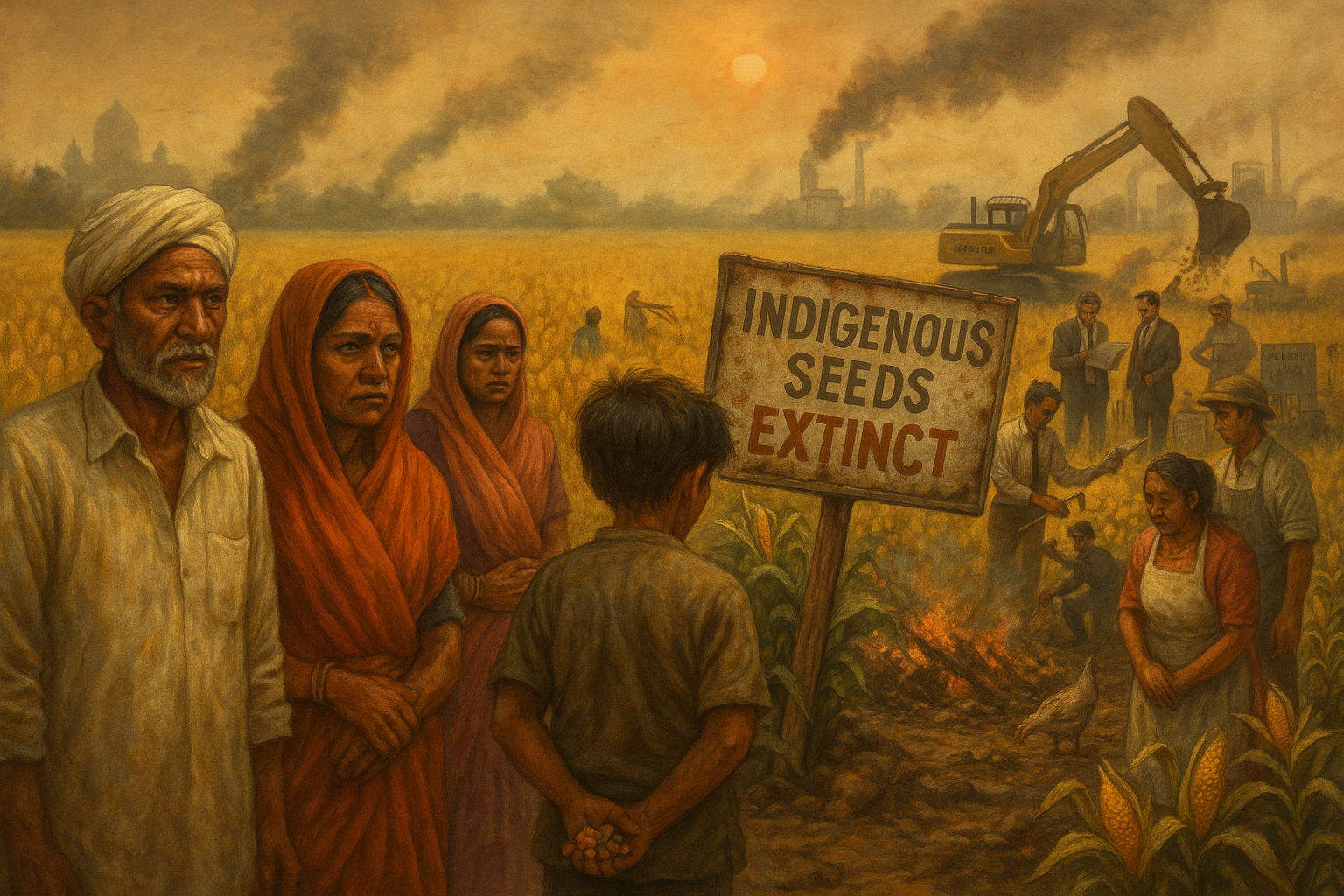
Seed systems are among the most contested sites of food justice. The corporate enclosure of seeds through intellectual property regimes has undermined farmers’ autonomy and criminalized traditional practices of saving and exchanging seeds (Kloppenburg, 2010). This represents not only economic injustice but epistemic injustice, the systematic devaluation of farmer-bred and indigenous knowledge systems.
Research consistently shows that indigenous and locally adapted seed varieties outperform commercial hybrids under climatic stress, particularly in rain-fed and marginal environments (Ceccarelli et al., 2010; Altieri et al., 2015). Community seed systems, seed festivals, and decentralized conservation initiatives challenge the dominant narrative that innovation must flow from laboratories to farmers, rather than the reverse.
Consumers, Nutrition, and Urban Food Injustice
Food injustice extends well beyond production. Urban food environments increasingly expose low-income consumers to unsafe, ultra-processed, and nutritionally poor foods. While food appears abundant, access to safe and nutritious food is constrained by income, geography, and market concentration (Swinburn et al., 2019).
The rhetoric of “consumer choice” masks structural determinants. When food environments are shaped by corporate retail, advertising, and long supply chains, choice is neither free nor informed. Justice-oriented food systems must therefore address availability, affordability, and proximity, reconnecting consumers with producers through decentralized markets and transparent supply chains.
Ecology, Climate Change, and Intergenerational Justice
Environmental degradation is fundamentally a justice issue. Industrial agriculture is a major contributor to greenhouse gas emissions, groundwater depletion, soil erosion, and biodiversity loss (IPCC, 2019). These impacts are disproportionately borne by smallholders, indigenous communities, and future generations those least responsible for ecological damage.
Agroecology has emerged as a scientifically robust and socially just alternative. Meta-analyses demonstrate that agroecological systems can enhance productivity, resilience, biodiversity, and livelihoods simultaneously, particularly in smallholder contexts (Pretty et al., 2018; HLPE, 2019). Importantly, agroecology reframes agriculture not as an extractive activity but as a socio-ecological process embedded in local contexts.
Intergenerational justice demands food systems that regenerate ecological resources rather than deplete them, and that resist techno-fix solutions which ignore underlying power asymmetries.
Policy Interventions for a Justice-Centered Food System
A justice-oriented transformation of food systems requires deliberate policy shifts across production, markets, welfare, and governance:
- Reorient Subsidies and Public Investment
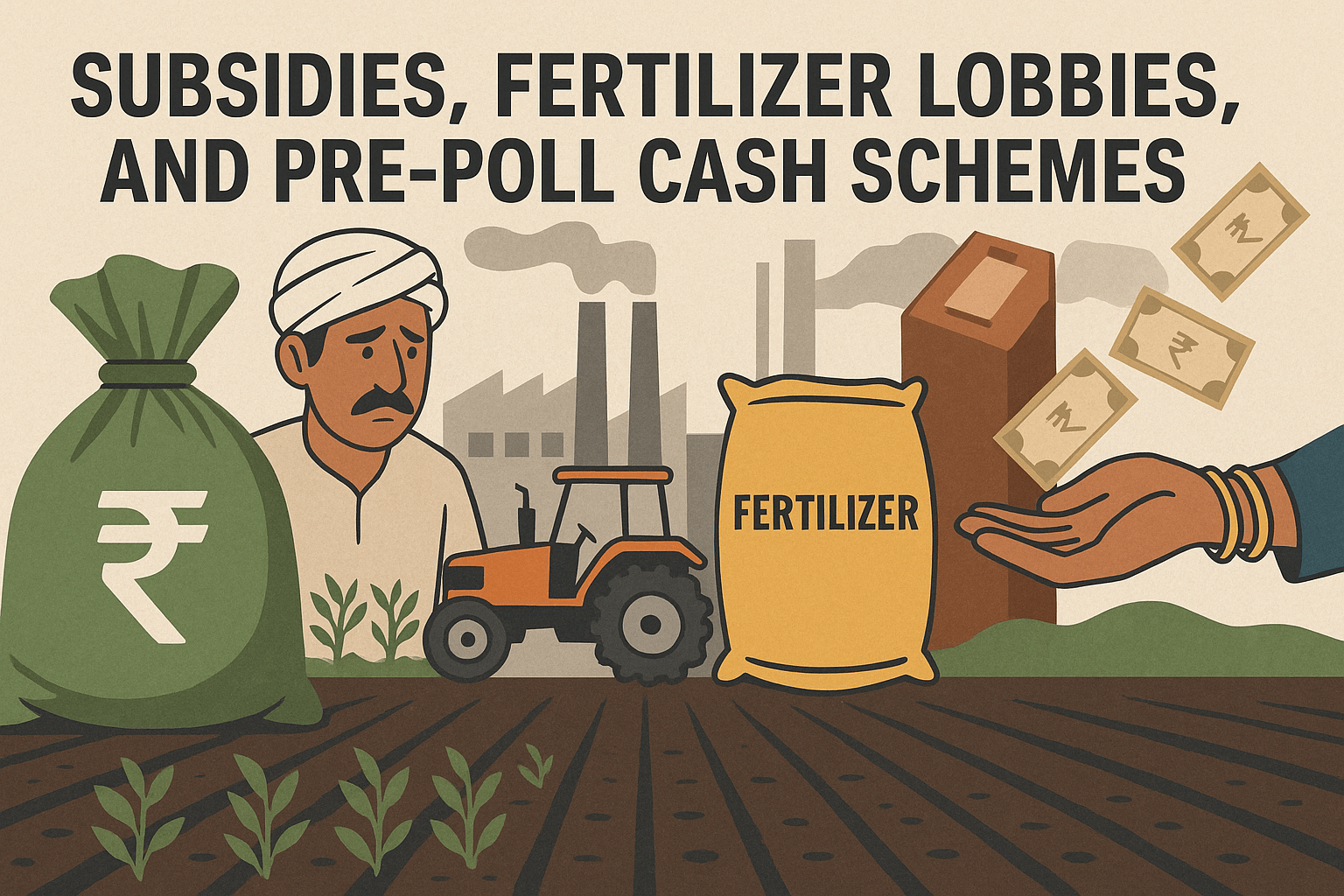
Redirect subsidies from chemical inputs and monocropping toward agroecology, diversified farming, pastoral systems, and soil–water regeneration. Evidence shows current subsidy regimes reinforce inequality and ecological harm (Narayanan, 2014). - Expand and Diversify Public Procurement
Public food programmes should move beyond rice and wheat to include millets, pulses, indigenous crops, and animal-sourced foods from small producers. This can simultaneously improve nutrition, farm incomes, and agrobiodiversity. - Integrate Food Systems with Employment and Ecology
Programmes such as Mahatma Gandhi National Rural Employment Guarantee Act demonstrate the potential to link livelihoods with ecological restoration. Food system regeneration commons revival, pasture development, seed conservation should be formally integrated into such frameworks. - Secure Commons and Tenure Rights
Justice requires legal and institutional protection of grazing lands, forests, and water commons. Secure tenure has been shown to improve ecological outcomes and livelihoods (FAO, 2012). - Support Decentralized Processing and Markets
Investment in local processing, storage, and distribution can reduce food loss, generate rural employment, and improve farmer share in consumer prices. - Institutionalize Participatory Governance
Food policy must be shaped with producers, not merely for them. Decentralized food councils and producer-led institutions can democratize decision-making and improve accountability.
Food as a Commons, Not a Commodity
At its core, a justice lens challenges the commodification of food. When food is treated solely as a market commodity, access is determined by purchasing power rather than need. This is incompatible with the right to food and with democratic ideals.
Reclaiming food as a commons implies collective stewardship, shared governance, and moral responsibility. It recognizes that land, seeds, water, forests, and knowledge are interlinked and cannot be governed through siloed, market-centric approaches. Community-led food systems are not nostalgic alternatives; they are practical infrastructures of justice.
Conclusion: Justice as the Foundation of Food System Transformation
A just food system must ensure dignified livelihoods for producers, nutritious and safe food for consumers, ecological regeneration for the planet, and democratic control over resources and knowledge. This requires moving beyond fragmented technical fixes toward structural transformation.
Justice-oriented food systems are inherently political because they redistribute power. They challenge entrenched interests while offering pathways grounded in lived practices already emerging across India. The task ahead is not to invent justice anew, but to recognize, strengthen, and scale the systems that marginalized communities have sustained despite systemic neglect.
Food systems, viewed through the lens of justice, are not merely about feeding populations, they are about reclaiming dignity, sovereignty, and the right to a livable future.