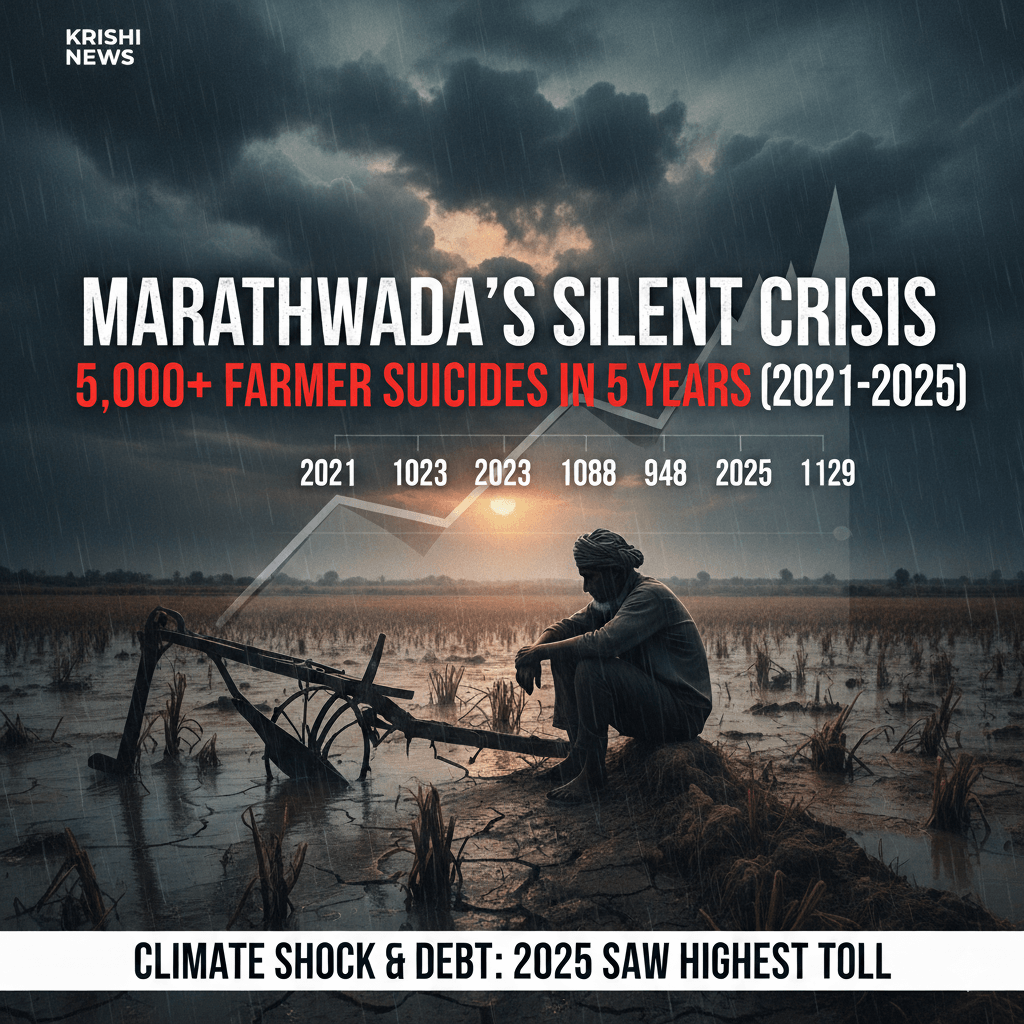
A recent official report has revealed a deeply worrying trend in Maharashtra’s Marathwada region. Over the past five years, from 2021 to 2025, more than 5,000 farmers have died by suicide. The year 2025 saw the highest number of these tragic deaths, with 1,129 farmers taking their own lives.
Marathwada is made up of eight districts: Chhatrapati Sambhajinagar, Jalna, Parbhani, Nanded, Beed, Dharashiv, Hingoli, and Latur. These areas are known for facing tough farming conditions. This includes periods of drought, unpredictable rainfall, and farmers struggling with growing debts.
The yearly figures paint a grim picture. In 2021, there were 887 suicides. This number rose to 1,023 in 2022 and 1,088 in 2023. In 2024, the count was 948. Then, in 2025, the number jumped significantly to 1,129.
Officials believe that a mix of extreme weather events and widespread crop failures led to the sharp increase in suicides in 2025. The district of Beed reported the most suicides that year, with 256 farmers dying. Chhatrapati Sambhajinagar followed with 224, and Nanded with 170.
Dharashiv recorded 141 suicides, Parbhani had 104, Jalna 90, Latur 76, and Hingoli saw 68. Families of some farmers who died received financial assistance, known as ex gratia, to help them cope.
The report specifically highlighted the severe impact of climate disruptions in 2025. Unseasonal rains in May caused problems, and many districts received rainfall that was 125% to 150% more than usual. The situation became even worse when floods hit parts of Marathwada in September and October 2025. These floods destroyed standing crops, adding immense financial pressure on farmers.
Significantly, 537 of the total suicides recorded in 2025 happened between May and October. This was the period when the region faced repeated rain-related disasters.
Officials also pointed out other factors contributing to farmers’ difficulties. These include extensive crop damage, rising costs for farming inputs like seeds and fertilisers, and delays in receiving compensation for crop losses. These issues made farmers more vulnerable.
Marathwada has long been one of the most distressed agricultural regions in India. Despite various government relief packages and announcements about loan waivers, the problem persists. The latest suicide figures have raised serious questions about how effective current support systems are. There is a clear need for more sustainable solutions. These solutions should focus on addressing rural debt, improving irrigation facilities, and building resilience against climate change for farmers in the region.