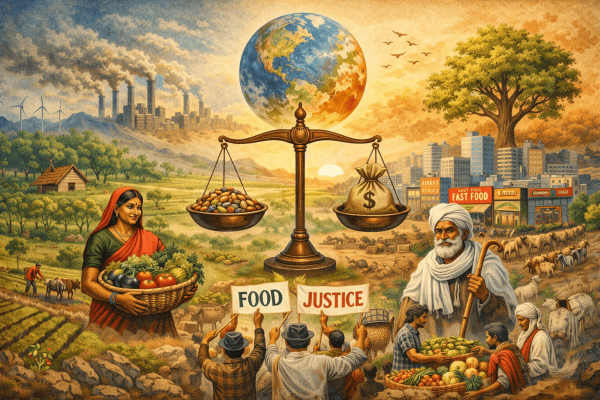
Food Systems and the Question of Justice: Reclaiming Food as a Commons, Not a Commodity

Food systems are routinely framed in terms of productivity, efficiency, technology, and markets. Policy debates focus on yields, supply chains, price stabilisation, and caloric availability. Yet this technocratic framing obscures a more fundamental question: justice. Who controls food systems, who bears their risks, whose knowledge is legitimized, and whose livelihoods are rendered expendable? When examined through…
Read More

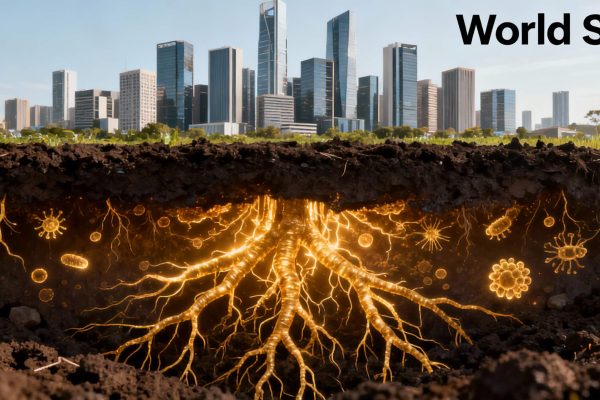
The Ground Beneath Us is Moving: A 2025 Global Status Report and Manifesto for World Soil Day

As we mark World Soil Day 2025 under the banner of “Healthy Soils for Healthy Cities,” the irony is stark. We are celebrating the vital link between urban resilience and soil health while staring down a barrel of data that suggests we are failing on both fronts. I see this year not just as a celebration, but as a…

Read More

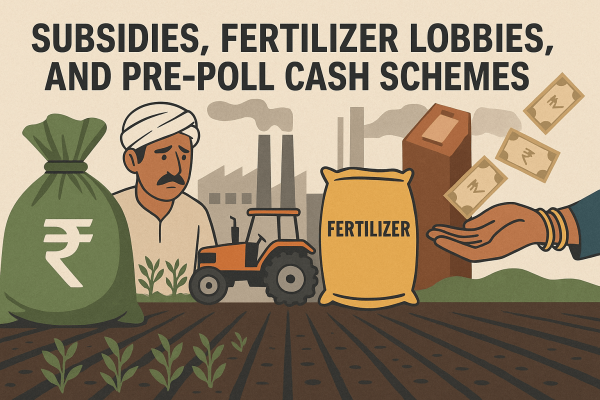
Subsidies, Fertilizer Lobbies, and Pre-Poll Cash Schemes: How India Built a Political Economy That Keeps Farmers Poor

India’s development model today rests on a fragile but politically convenient formula: chemicals for farmers, cash for voters.It is a system designed not to solve problems, but to manage them till the next election cycle. At the heart of this lies a political economy where fertilizer lobbies, agricultural subsidies, and now large-scale pre-election cash transfer schemes like Ladli/Ladki Behna define…

Read More

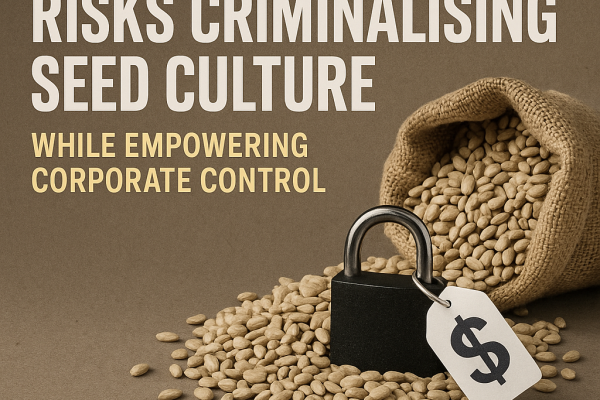
Seeds Bill 2025 Risks Criminalising India’s Seed Culture While Empowering Corporate Control

India’s seed systems are among the oldest and most diverse in the world. Long before the state formalised agricultural regulations or private companies entered the sector, farmers, tribal communities, and women seed keepers nurtured, exchanged, and evolved seeds through relationships of trust, commons governance, and deep ecological knowledge. It is this decentralised, biodiversity-rich, community-led seed…

Read More